By Victoria Qiu · · 10 min read
Updated 19 November 2026.
Custom packaging samples help buyers check whether a proposed pack works for the product, artwork and packing process. A useful review starts with a clear brief, follows a consistent inspection method and ends with written decisions about what is approved and what needs revision.
This guide from XINXIN Printing & Packaging is for brand owners, importers, purchasing teams and designers reviewing paper boxes, bags, inserts and shipping packaging. The aim is to turn sample feedback into requirements that the buyer and supplier can use before production.
What to Prepare Before Requesting a Packaging Sample
Explain what the sample needs to demonstrate. Checking whether a product fits requires different preparation from evaluating a printed brand colour or decorative finish.
Include the following in your request:
- Packaging purpose: Retail display, gifting, e-commerce delivery or another application.
- Product and packaging dimensions: State the units and whether packaging dimensions are internal or external.
- Product weight and fit requirements: Include accessories, protective wrapping and any surfaces that must avoid pressure or contact.
- Expected order quantity: Give quantities by size, design or product variant.
- Materials, printing and finishes: Identify preferences and any requirements already agreed.
- Existing files: Supply artwork, structural drawings and the current revision of any dieline.
- Delivery requirements: Provide the destination country and desired sample arrival date, identifying any launch or approval deadline.
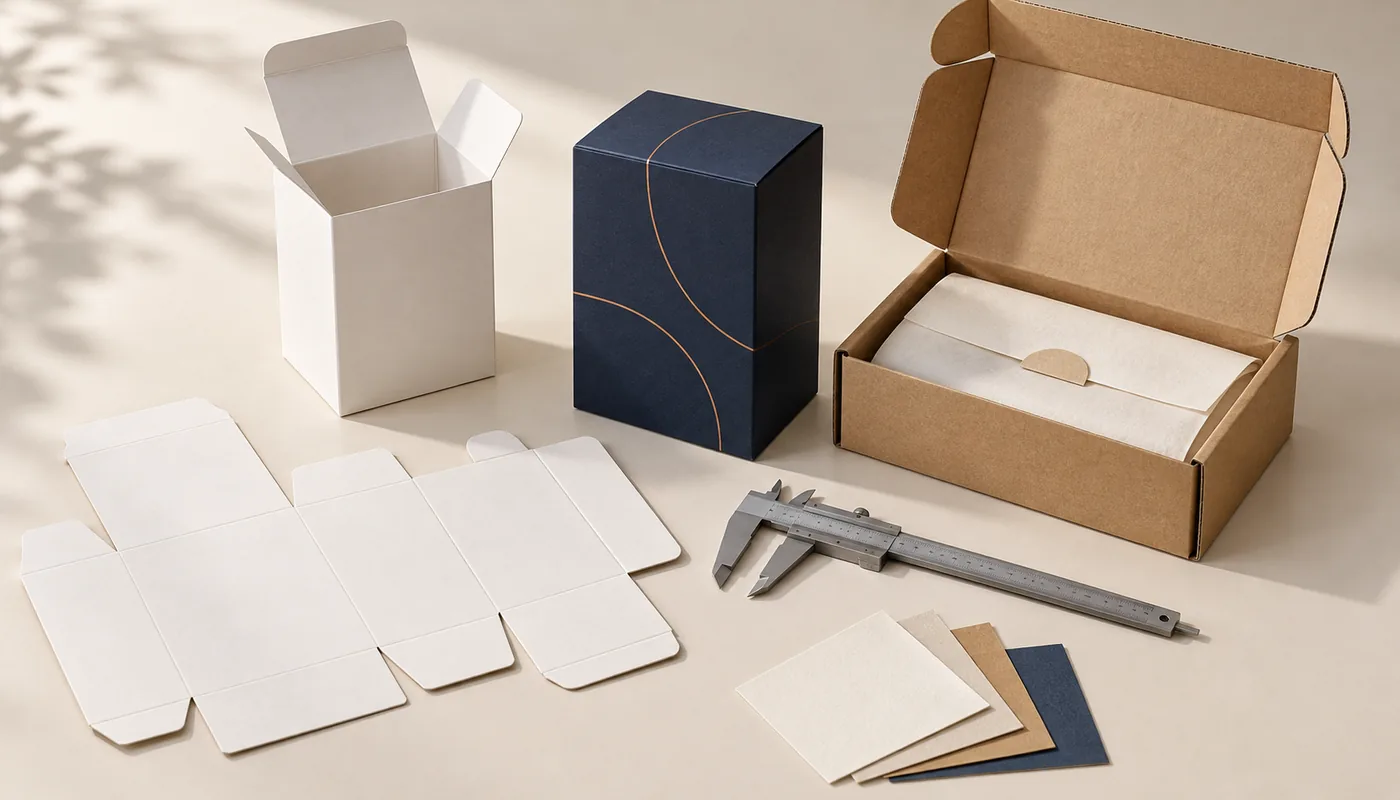
A dieline is a flat drawing showing cutting, folding and gluing positions. If you do not have one, discuss the packaging structure with the supplier before finalising artwork.
When practical, provide the actual product. If a substitute is necessary, explain how its dimensions, weight or shape differ. Review the prepress artwork guide when preparing files for a printed sample.
Choose the Sample Type That Matches Your Approval Question
Sample names vary between suppliers. Confirm what will be supplied and how closely it represents the planned production materials, equipment and processes.
| Sample type | What it can help confirm | Limitations and questions to clarify |
|---|---|---|
| Unprinted structural sample | Usable dimensions, product fit, insert position, opening and assembly | It does not establish print colour or finishing quality. Confirm any differences in board, cutting, creasing or assembly from production. |
| Printed appearance sample, including a digital mockup | Artwork placement, panel orientation, readability and overall presentation | Paper, ink, colour and decorative effects may differ from production. Identify which features are representative and which are simulated. |
| Pre-production sample | The proposed combination of structure, materials, printing and finishing | Confirm whether it uses the intended materials, equipment and processes. List substitutions and agree how any remaining differences will be evaluated. |
If the immediate concern is product fit, a structural sample may answer the first question. If colour on a particular paper is critical, a suitable printed reference is also needed. No single sample should be assumed to prove every aspect of production.
How to Inspect Packaging Samples When They Arrive
Before opening the delivery, photograph its condition if there is visible damage. Identify the sample reference, date, drawing revision and artwork version so findings are attached to the correct sample.
1. Pack the actual product and complete contents
Place the real product inside with every component that will be included: inserts, accessories, labels, instructions and protective wrapping.
Check whether the product can be loaded and removed without forcing the opening. Look for unwanted movement, excessive pressure, contact with delicate surfaces and a lid or closure that will not sit correctly. Review each product variant intended to share the packaging.
Record: The product version, complete contents, location of the problem and photographs showing the packed condition. Identify the contact point or clearance issue rather than asking only for a “better fit.”
2. Measure dimensions and try assembly, closing and opening
Compare the sample with the agreed drawing. Measure at the defined points using the agreed internal or external dimension basis. Record units and actual results against the specified requirements.
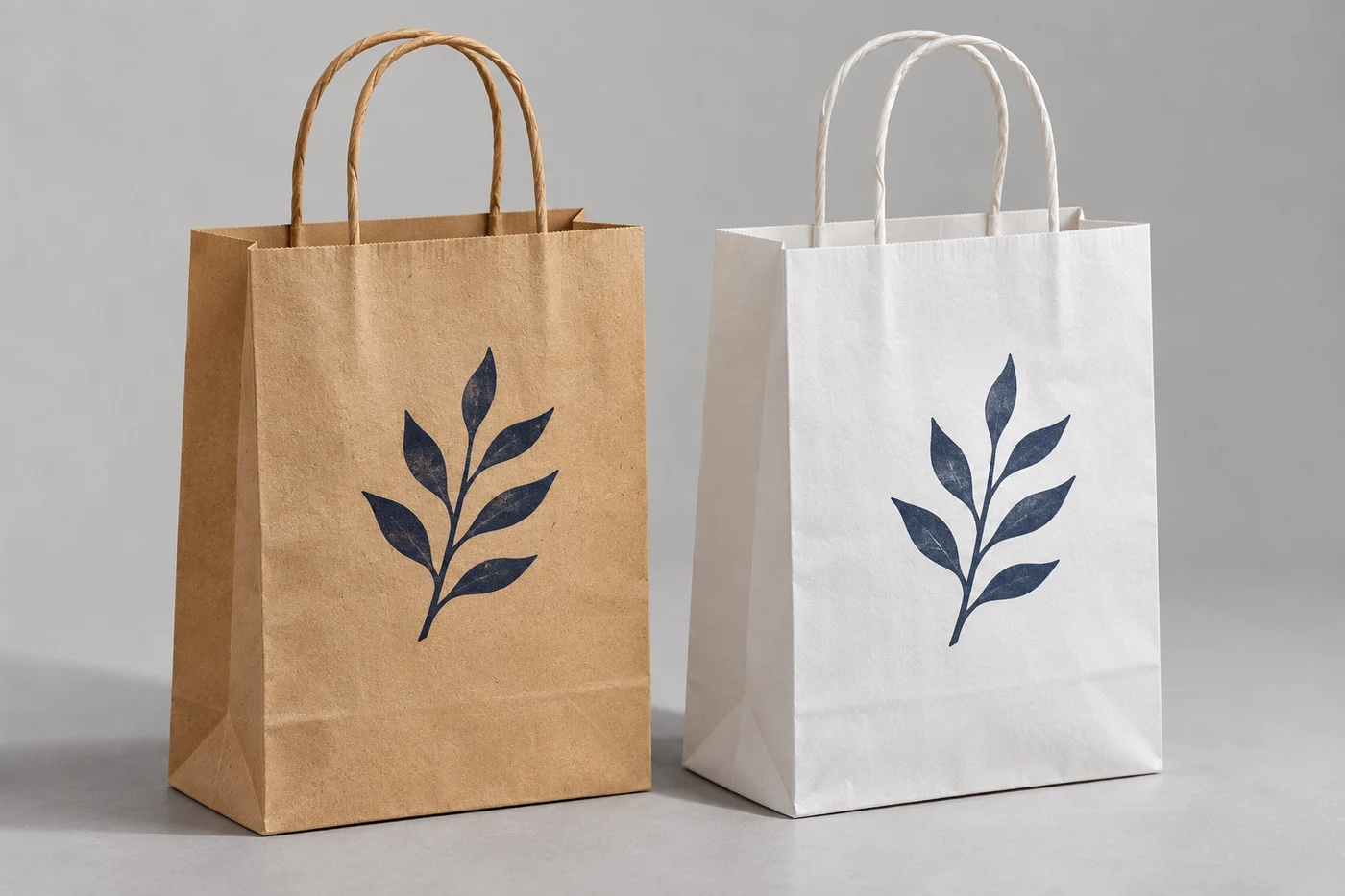
Assemble the pack using the intended workflow. Check folds, tabs, glue joints, inserts and closures. Note any steps that require unusual force, extra handling or unclear instructions. For paper bags, check the gussets, base and handle attachment areas under the proposed conditions of use.
Record: Expected and measured dimensions, measurement points, assembly difficulties and photographs of gaps, distortion or damaged areas. Request an agreed correction instead of applying an unspecified tolerance.
3. Compare materials and construction with the specification
Check the agreed paper or board grade, grammage or thickness, surface treatment, insert material and construction. Thickness and grammage describe different properties; confirm which measurements apply and how they should be taken.
For corrugated packaging, review the specified board construction rather than treating “kraft” as a complete specification. Inspect cut edges, creases, corners and glued joints. Ask which prototype materials or manual operations will change during production.
Record: Material references, measured results where applicable, visible defects and any declared substitutions. Appearance alone does not establish material strength or performance.
4. Check text, graphics and machine-readable codes
Compare every panel with the current artwork. Review spelling, translations, product variants, instructions and buyer-approved mandatory information. Check orientation, small text, contrast and graphics near folds or seams.
Scan printed barcodes or QR codes using the intended reading method where possible. Confirm the decoded information and, for linked QR codes, the destination. A successful phone scan does not replace any required retail barcode verification.
Record: The artwork filename and revision, affected panel, incorrect content and the expected correction. For code problems, record the printed location, device or method used and the observed result.
5. Review printing and special finishes
Assess colour against the agreed reference under the agreed viewing conditions. Paper colour, texture, coatings and lamination can affect appearance. Use photographs to identify defect locations, rather than treating a phone image as the colour approval reference.
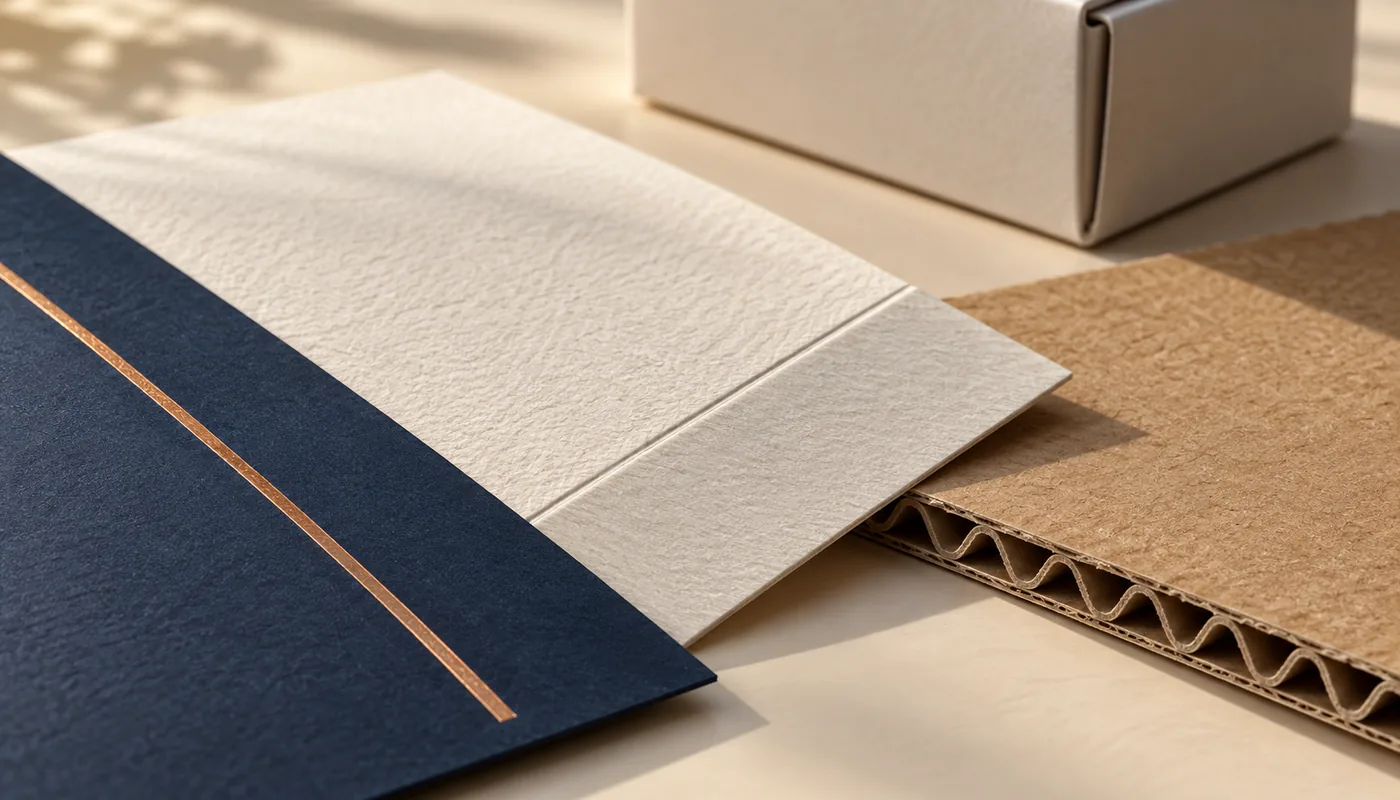
Inspect print registration, solid areas, foil placement, embossing, coating coverage and cracking around folds. Compare these with the confirmed specification and acceptance requirements.
Record: The reference used, viewing conditions, defect position and supporting photographs. Describe the issue clearly—for example, foil crossing a crease or missing coating—without inventing a universal acceptance limit.
6. Review packing and transport protection
Check whether production packaging will arrive flat, assembled or partly assembled. Review bundle protection, outer cartons and the packing sequence for the finished product.
Consider the complete shipping system: product, presentation packaging, inserts, cushioning and outer carton. Agree whether transport testing or other validation is needed for the delivery route and product risks. A visual sample review alone does not establish shipping performance.
Record: The packed configuration, product weight, outer packaging and proposed validation requirements. If materials, inserts or packed weight change, ask whether earlier validation remains applicable.
Illustrative Example: Reviewing a Pump-Bottle Carton
This is a hypothetical inspection scenario, not a XINXIN customer case.
Suppose a buyer receives a carton and paper insert for a pump bottle. The bottle enters the insert, but its pump touches the top panel when the carton closes.
The buyer should:
- Confirm that the bottle and insert are the intended versions.
- Photograph the complete packed arrangement and mark the contact point.
- Record the relevant bottle height and internal clearance using agreed measurement points.
- Ask the supplier to propose a structural correction and identify any artwork areas it affects.
- Review the revised sample for closure, product movement, removal and artwork placement.
The original sample should remain identifiable. Approval should reference the revised drawing and sample, so the supplier does not treat the earlier fit check as approval of the corrected design.
Confirm Sample Costs, Timing and Revisions
Request a quotation based on the sample type, materials, tooling, printing, finishes and number of versions. Confirm which charges apply to revisions and shipping. Do not assume that sampling charges will be credited against a later order unless that arrangement is stated in writing.
Separate sample-making time from shipping time. Ask when the production schedule starts, what information must be approved first and how revisions may affect dispatch. Allow separately for transport and any destination clearance requirements.
Send revision feedback as one organised list containing:
- Sample and file references.
- Photographs and measurement results.
- A clear description of each issue.
- The required outcome or a request for a proposed solution.
After revision, recheck the affected features and any connected items. A change to an insert, for example, may also affect assembly, usable space and product removal. Obtain an updated sample or other agreed evidence where needed before approving the change.
Complete a Written Approval Before Bulk Production
Keep one approval record for each packaging version. The record should connect the physical reference sample with the final drawings, files and acceptance requirements.
| Approval item | What to confirm in writing |
|---|---|
| Sample identity | Project, product variant, sample reference, date and revision. |
| Final dimensions and structure | Drawing revision, internal or external dimension basis, measurement points, agreed tolerances and insert configuration. |
| Materials and processes | Paper or board specification, inserts, surface treatments, printing and finishing requirements, including accepted sample-to-production differences. |
| Approved artwork | Final filenames, revision identifiers, colour references and finishing files. |
| Revision results | Requested changes, how each was checked and the revised sample or evidence used for approval. |
| Acceptance requirements | Agreed visual and functional criteria, inspection methods and any applicable production inspection or sampling arrangements. |
| Packing and separate validation | Supplied condition, packing method, outer protection and required test records or outstanding conditions. |
| Production release | Approval scope, any exclusions, authorised approver and approval date. |
Use an explicit decision: approved for the stated scope, revise and resubmit, or hold until specified conditions are resolved.
Retain the approved reference sample and final files. Sample approval establishes an agreed reference; it does not guarantee that every unit in a production run will be identical. Bulk production still needs to be assessed against the agreed specification and acceptance requirements.
Frequently Asked Questions
Do I need a printed sample before ordering packaging?
It depends on the decisions that need approval. A structural sample can address fit and assembly. Artwork placement, critical colours and decorative finishes may require a suitable printed reference before those requirements are released for production.
Can I approve the structure while colour is still being reviewed?
Yes, if both parties clearly document that the approval is limited to structure. State what remains unapproved and whether production must wait. Avoid a general “approved” message that could be interpreted as permission to proceed with the entire order.
Does a repeat order need another sample?
Review whether the product, structure, material, artwork, process or acceptance requirements have changed. Confirm whether the existing approved reference remains suitable and whether new sampling or validation is needed.
Discuss Your Packaging Sample with XINXIN
Choose the relevant format, such as gift boxes and folding cartons, corrugated boxes and mailers or paper bags.
Send XINXIN your packaging type, dimensions, expected quantity, design files and delivery destination. Include the product weight, intended use and the questions the sample needs to answer. Contact XINXIN to discuss an appropriate sampling approach and the requirements to confirm before production.
General guidance only. Discuss the product-specific materials, process, market requirements and testing before approving production.